Is a Drain Camera Worth It? A Practical ROI Guide for Aussie Plumbers
A drain camera can feel like a big investment when your current setup already gets jobs done.
But the real question isn’t simply “How much does a drain camera cost?”
It’s:
How much time, guesswork and repeat work could the right camera save you?
For plumbers and drainage specialists, being able to see what’s happening inside a pipe can change the way a job is diagnosed, quoted and completed. Instead of working from symptoms alone, you can inspect the line, identify the likely cause of the problem and show the customer what you’ve found.
That can mean fewer assumptions, better documentation and a more professional service from start to finish.
In this guide, we’ll look at where a professional drain camera can add value, how to think about return on investment and what to consider when choosing a system for your business.
Quick Takeaways
A professional drain camera can help you:
- Identify problems without relying solely on guesswork.
- Inspect pipework before recommending repairs.
- Provide customers with visual evidence.
- Reduce unnecessary excavation.
- Confirm the condition of a line after cleaning or jetting.
- Add CCTV inspections to your service offering.
- Work more efficiently when combined with a locator.
- Build a more capable drainage setup as your business grows.
Where Does a Drain Camera Actually Save You Money?
The biggest benefit isn’t necessarily charging more for every job.
It’s knowing more before you act.
When you’re dealing with recurring blockages, damaged pipework, tree-root intrusion or an unknown fault, working blind can cost time.
You may clear the immediate blockage without seeing what caused it. The problem can then return, resulting in another visit and an unhappy customer.
A drain camera allows you to inspect the pipe and look for issues such as:
- Cracks or damaged sections
- Tree-root intrusion
- Pipe displacement
- Collapsed sections
- Built-up debris
- Foreign objects
- Junctions and connections
- Areas requiring further cleaning
Instead of saying:
“I think the issue is around here.”
you have a much better opportunity to say:
“Here’s what we found.”
That difference can make the entire job easier to explain.
Reduce the Guesswork Before You Dig
Excavation is where inaccurate diagnosis can become expensive.
If you dig in the wrong position, you’ve potentially created additional labour, restoration work and inconvenience without fixing the actual problem.
A drain camera combined with a compatible sonde and locator can help identify where a problem sits underground.
The camera shows you what is happening inside the pipe.
The locator helps determine where that camera head is positioned from above ground.
For plumbers carrying out repairs, this can help reduce unnecessary exploratory digging and allow the repair to be planned with more confidence.
That’s particularly valuable when the line runs underneath:
- Driveways
- Concrete Slabs
- Landscaping
- Finished Outdoor Areas
- Commercial Premises
The less unnecessary disruption you create, the easier the job can be for both you and the customer.
Turn CCTV Inspections Into a Better Customer Experience
A customer usually can’t see what you see.
They know the drain is blocked, but they may not understand whether the cause is grease, roots, damage or something more serious.
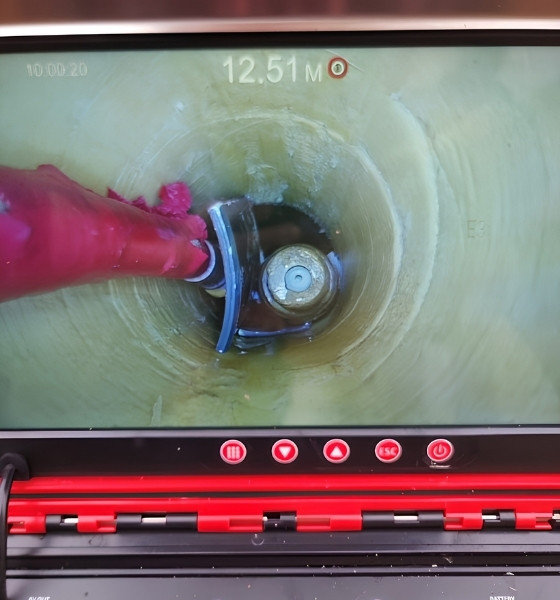
CCTV footage helps bridge that gap.
Instead of simply recommending additional work, you can show the customer what you’ve found and explain why you’re recommending it.
That transparency can be especially useful when discussing:
- Pipe Repairs
- Relining
- Excavation
- Root Removal
- Preventive Maintenance
- Additional Jetting
- Recurring Drainage Problems
It isn’t about using footage to pressure somebody into spending more.
It’s about giving them better information so they understand the problem and the options available.
For property managers, commercial clients and other customers responsible for maintaining multiple sites, recorded inspection footage can also provide useful documentation.
The “Clear and Confirm” Approach
One of the most useful ways to incorporate a camera into your workflow is to use it both before and after the drain is cleared.
A simple process could look like this:
Inspect → Clear → Inspect Again
Start with the camera to identify the condition of the line and the likely cause of the blockage.
Use the appropriate equipment to clear or clean the drain.
Then perform another camera inspection to check the result.
This final inspection can help confirm that the blockage has been cleared and reveal whether any underlying structural issue still needs attention.
For the customer, it also provides something much more convincing than simply being told:
“It should be right now.”
You can show them.
How Can a Drain Camera Generate a Return on Investment?
There isn’t one universal payback period.
Every plumbing business operates differently.
The return depends on things such as:
- How frequently you perform drain work
- The types of jobs you handle
- Whether CCTV inspection is charged separately
- How much time the equipment saves
- Whether it helps identify additional legitimate repair work
- How much downtime the equipment experiences
- How long the system remains serviceable
A better way to calculate ROI is to use your own numbers.
Simple Drain Camera ROI Formula
You can start with:
Equipment cost ÷ additional profit generated or time saved per month = approximate payback period
For example, consider:
- How many drainage jobs you complete each month
- How many would benefit from CCTV inspection
- What you normally charge for inspection work
- How much labour time accurate diagnosis could save
- How many return visits could potentially be avoided
That gives you a much more realistic picture than relying on a generic claim that a camera will “pay for itself in X months.”
Don't Forget the Cost of Downtime
Purchase price isn’t the only number worth considering.
For working plumbers, downtime matters.
A cheap camera that becomes unusable because a cable, camera head or connector fails can quickly become more expensive than expected if replacement parts or repairs are difficult to obtain.
Before choosing a system, consider:
- Can the camera head be replaced?
- Can the push cable be repaired?
- Are spare parts available?
- Is repair support available in Australia?
- Can individual components be serviced without replacing the complete system?
Razorback Drain Pros provides repair and servicing support for its drain camera equipment, helping plumbers keep existing gear working rather than treating the entire unit as disposable. The original article correctly identified downtime and repairability as important parts of equipment ROI.
Cheap Drain Cameras vs Professional Equipment
There’s a place for budget equipment, particularly if you’re experimenting with CCTV inspection for the first time.
But a camera used occasionally at home has a very different job from equipment being pushed through drains several times a week.
Professional equipment needs to cope with:
- Repeated pushing and retrieving
- Tight bends
- Wet working conditions
- Rough pipe interiors
- Transport in a work vehicle
- Frequent cleaning
- Everyday knocks on site
That means the real value of a professional system isn’t necessarily a flashy specification.
It’s whether the equipment can reliably do the job you bought it for.
When comparing drain cameras, pay particular attention to the camera head, push cable, waterproofing, replaceable components and repair options.
Choosing the Right Camera Head
There isn’t one perfect camera size for every drain.
The right setup depends heavily on the type of work you do.
21mm Camera Heads
For many general drainage inspections, a 21mm camera head provides a useful balance between visibility, durability and manoeuvrability.
Razorback’s Monster 21mm Drain Camera and The Boar 21mm Drain Camera are designed as reliable everyday inspection systems for plumbers working across common residential and maintenance drainage applications.
Smaller Camera Heads
Smaller heads can be useful where access is restricted or you’re dealing with tighter pipework.
Razorback also offers a 12.8mm HD Drain Camera Head for applications where a larger head isn’t suitable.
Larger Camera Heads
Razorback’s The Beast 29mm Drain Camera and Big Unit 39mm Drain Camera are better suited to larger pipework, where a larger camera head can provide improved lighting, visibility and stability during inspections.
The important thing is to choose a camera based on the pipe sizes and types of jobs you regularly work with, rather than simply buying the biggest or most expensive model.
When One Camera Size Isn't Enough
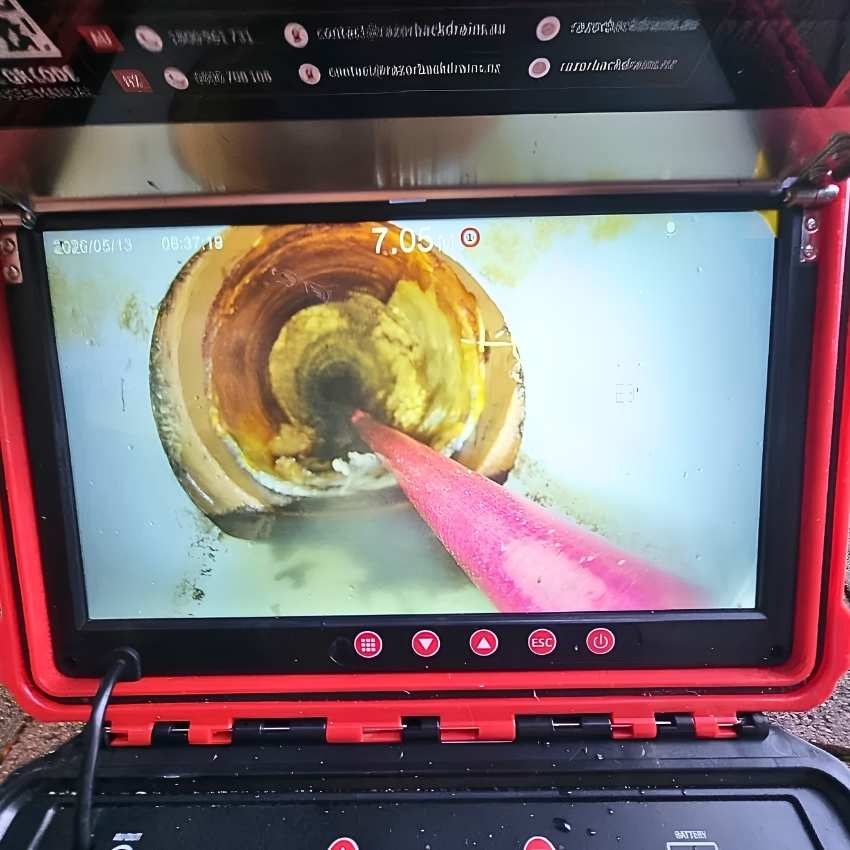
Some plumbers work across both larger drains and smaller branch lines. In that situation, having access to different camera-head sizes can reduce the need to carry completely separate systems.
The Double P Dual Drain Camera, for example, combines different camera options in one setup, giving plumbers more flexibility across a wider range of inspection work.
If you need 4K recording, a fully waterproof system, Wi-Fi connectivity, and the option to use multiple camera heads, the Bull Frog Drain Camera is another strong choice for more advanced inspection work.
That kind of flexibility can become more valuable as the drainage side of your business grows.
Why Self-Levelling Matters
Self-levelling won’t necessarily help you clear a blockage faster.
What it improves is the quality and readability of the inspection footage.
As a standard camera moves through a pipe, the image can rotate as the cable twists.
A self-levelling camera keeps the image upright, making footage easier to interpret and easier to show to customers.
That’s particularly useful when you’re:
- Recording inspections
- Explaining faults to customers
- Reviewing footage later
- Documenting pipe condition
- Preparing inspection reports
It’s a relatively small feature that can make CCTV inspection footage feel considerably more professional.
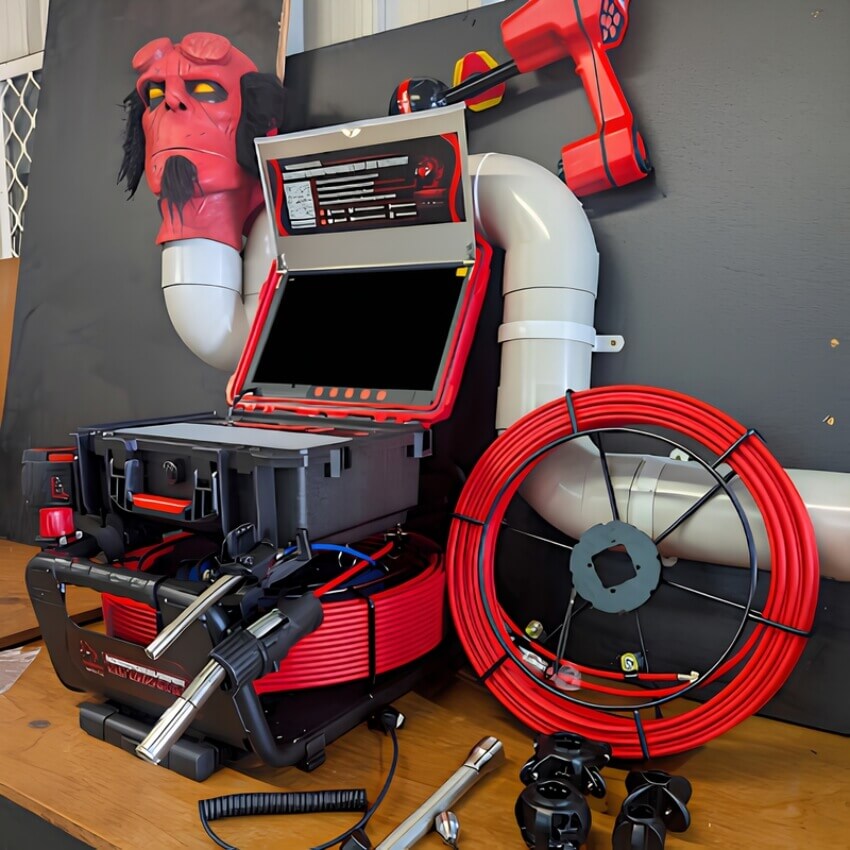
Drain Camera + Locator: A Stronger Combination
A camera can show you the problem. A locator can help you find where that problem is.
That’s why plumbers performing repair work often benefit from using the two together. Camera heads equipped with a compatible sonde transmit a signal that can be picked up above ground using a locator.
This can help identify the approximate:
- Position of the camera
- Path of the pipe
- Location of the fault
- Depth of the camera head
For excavation work, that additional information can be extremely useful.
If locating faults is a regular part of your work, consider the camera and locator as part of the same diagnostic system rather than two completely separate tools.
Prefer an all-in-one setup? Razorback also offers drain camera packages that combine key inspection equipment and accessories in one kit. Depending on the package, these can include a locator, spare parts, cables, camera heads and other essentials.
Available options include the Starter Drain Camera Pack, Trade Drain Camera Pack, and Pro Drain Camera Pack.
Build a Drain Camera Setup Around the Work You Actually Do
Don’t buy equipment simply because another plumber owns it.
Start with your workload.
Ask yourself:
- What size pipes do I inspect most often?
- How frequently will I use the camera?
- Do I need recording?
- Do I need Wi-Fi?
- Do I need a built-in sonde?
- Will I need a locator?
- Do I regularly inspect both small and larger lines?
- How important is local repair support to my business?
Razorback offers several camera configurations and drain camera packs, allowing plumbers to build their setup around the type of drainage work they actually perform rather than purchasing equipment they don’t need. The source article also structured its recommendations around Starter, Trade and more advanced equipment configurations. Pasted text
So, Is a Drain Camera Worth It?
If drain work represents a meaningful part of your plumbing business, a professional drain camera can be much more than another tool in the ute.
It can help you:
- See the problem.
- Explain the problem.
- Locate the problem.
- Confirm the repair.
And ultimately, make better-informed decisions on site.
The return isn’t only measured by how much you charge for an inspection.
It’s also found in the hours you don’t waste guessing, the unnecessary digging you avoid, the clearer conversations you have with customers and the jobs you can confidently take on because you have the equipment to diagnose them properly.
For a plumber who only encounters a blocked drain occasionally, investing in a full professional setup may not make sense yet.
But if drainage inspections are becoming a regular part of your workload, the right camera can quickly become one of the most useful pieces of diagnostic equipment in your vehicle.
Ready to Upgrade Your Drain Inspection Setup?
Whether you need a compact camera for tight lines, a reliable everyday system or a more complete camera-and-locator setup, choose equipment around the jobs you’re actually doing.
Explore Razorback Drain Pros drain cameras and equipment packs to find the setup that suits your work.