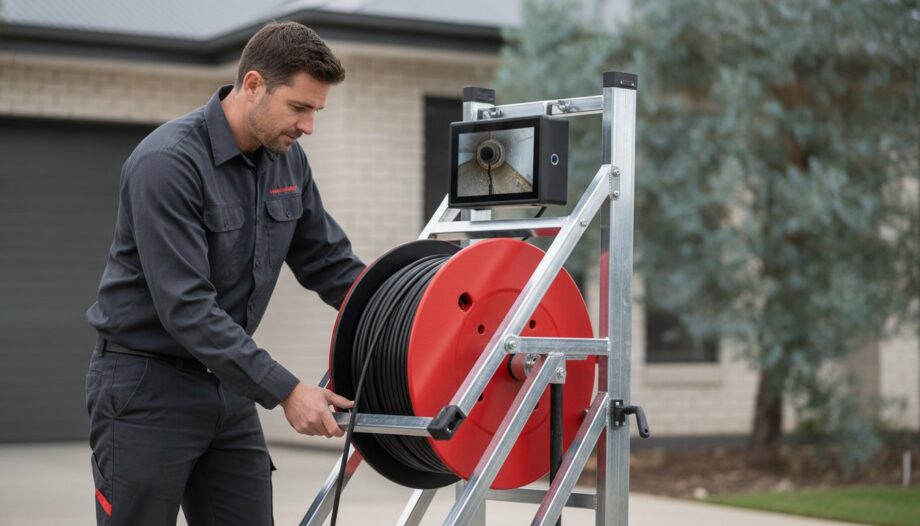
A drain camera isn’t just a piece of kit; it’s a diagnostic sales engine that turns a standard call-out into a high-margin repair job. If you’re looking at how to start a drain inspection business in Australia, you already know the massive potential. You also know the headaches. High entry costs for quality gear and the constant fear of equipment downtime can stall a new venture before the first pipe is even scoped.
We get it. You need gear that works as hard as you do and a strategy that doesn’t get bogged down in red tape. This no-nonsense trade guide cuts through the noise to give you a clear blueprint for success in 2026. We’ll break down the essential Australian licensing requirements and the latest public liability standards. You’ll get a straight-talking equipment list featuring workhorses like the Monster 21mm, alongside a plan to turn simple inspections into lucrative repair work. It’s time to stop guessing and start earning with a business built on reliability and rugged AU-spec technology.
Key Takeaways
- Stop guessing and start selling high-value repairs. Use CCTV as your primary diagnostic tool to win more work and prove the problem to the client.
- Navigate the red tape with ease. Learn how to start a drain inspection business in Australia by mastering ABN registration and state-specific plumbing licence rules.
- Ditch the cheap imports that fail on site. Invest in repairable, AU-spec gear like the Monster 21mm to keep your business moving and avoid costly downtime.
- Win your first ten jobs fast. Build professional reports and dominate local search results with a proven trade marketing strategy.
- Maintain your way to more profit. Use simple daily rituals to extend the life of your camera head and push rod, protecting your startup investment.
The CCTV Opportunity: Why Drain Inspection is 2026’s Best Trade Niche
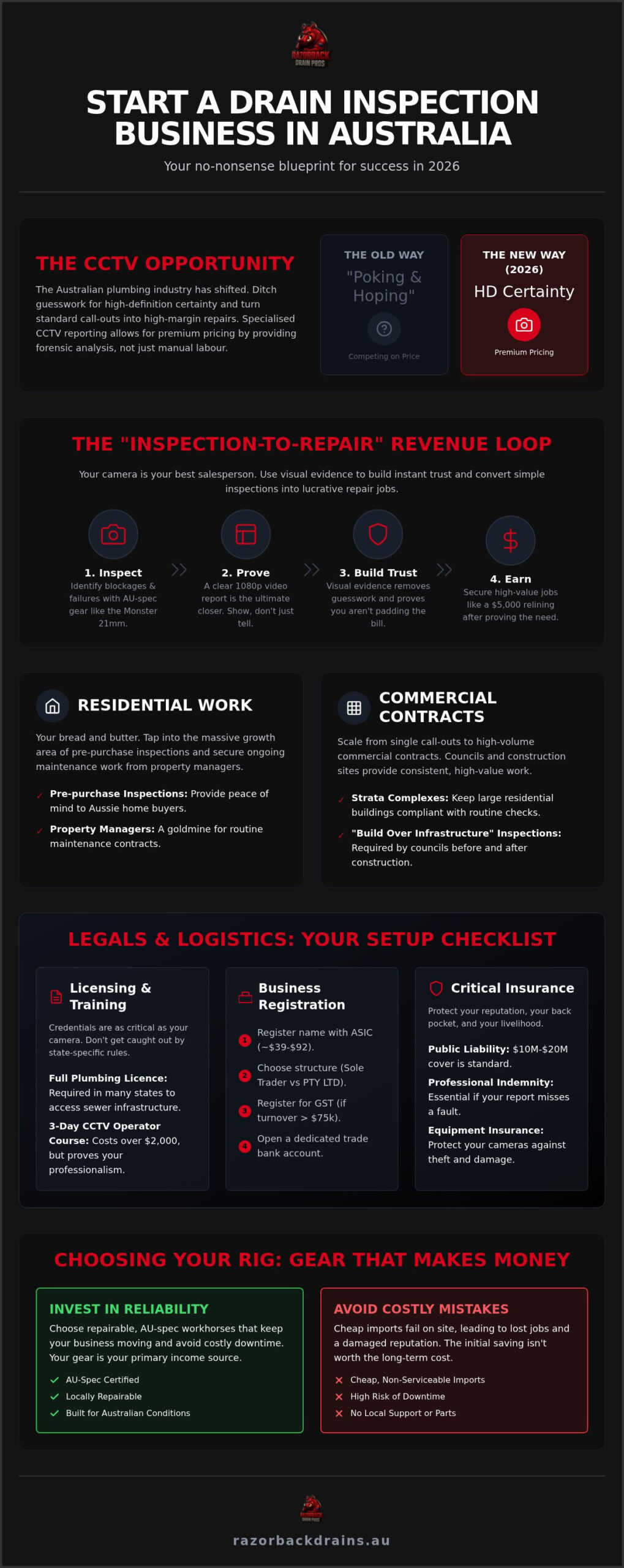
Stop guessing. In 2026, if you aren’t using vision, you’re losing money. The Australian plumbing industry has shifted from “poking and hoping” to high-definition certainty. Modern CCTV drain cameras are the backbone of this change. They provide the data you need to justify big-ticket solutions. When you’re learning how to start a drain inspection business in Australia, you’re learning how to build a diagnostic powerhouse that drives revenue. It is the most effective way to separate yourself from the pack of general plumbers competing on price alone.
The demand is relentless. Australia’s infrastructure is aging. Urban sprawl is putting massive pressure on old clay pipes, and tree roots don’t take days off. This creates a consistent volume of work. Compare the profit margins. A standard plumbing hourly rate keeps the lights on. Specialised CCTV reporting, however, allows for premium pricing because you’re providing forensic analysis. You aren’t just clearing a blockage; you’re assessing the structural integrity of an asset. This shift from manual labour to technical expertise is where the real money is made. Identifying how water ingress affects foundations allows you to provide comprehensive value, often leading to referrals for specialists like A1 Precision Solutions who handle commercial concrete slab lifting and underpinning.
The “Inspection-to-Repair” Revenue Loop
The camera is your best salesperson. By using a rugged workhorse like the Monster 21mm, you identify lucrative blockages or structural failures that a plunger or basic jetter would miss. A clear video report is the ultimate closer. When a client sees a collapsed pipe or a massive root ball in 1080p, a $5,000 relining or dig-up job becomes an easy sell. Visual evidence builds instant trust. It removes the guesswork and proves you aren’t just “padding the bill”. You provide the proof, and the high-value repair work follows naturally. You can even expand your service offering by recommending inTouch R&B for remote monitoring of critical assets like sump pumps, providing clients with ongoing security.
Commercial vs. Residential Opportunities
Residential work is your bread and butter. Pre-purchase inspections are a massive growth area for Aussie home buyers. No one wants a $20,000 surprise after they’ve signed the contract. You provide peace of mind. Beyond homes, property managers are a goldmine. They need routine maintenance to keep strata complexes compliant. A growing number of local councils now require “Build Over Infrastructure” inspections before and after any construction work. Knowing how to start a drain inspection business in Australia means knowing how to tap into these diverse, high-volume revenue streams. You can scale from single residential call-outs to multi-site commercial contracts using the same reliable kit. If you are looking for inspiration from other successful niche trade models, you can check out Utah Heat Cable to see how they provide specialised protection for property infrastructure.
Legals and Logistics: Setting Up Your Australian Business
You can’t just buy a camera and start charging. You need a solid legal foundation before you drop a lens into a pipe. Understanding how to start a drain inspection business in Australia begins with getting your legal ducks in a row. It isn’t just about compliance; it is about protecting your reputation and your back pocket. Don’t get caught out by state-specific rules that could shut you down before you finish your first month.
Licensing is your first hurdle. Across various Australian jurisdictions, accessing sewer infrastructure for CCTV work requires a full plumbing licence. Other regions might offer restricted specialist paths, but the trend is moving toward stricter enforcement. Check with Master Plumbers Australia to ensure you meet the 2026 standards for your specific area. Do not skip the formal training. A 3-day CCTV Operator course can cost over $2,000, but it is the difference between a professional and a cowboy. When you are mapping out how to start a drain inspection business in Australia, your professional credentials are as critical as your camera.
Australian Business Registration Steps
Start with the basics. Register your business name with ASIC. It costs roughly $39 for one year or $92 for three years. Choose your structure wisely. A sole trader setup is fast and cheap to start, but a PTY LTD company offers better asset protection as you scale. If you expect your turnover to hit $75,000, register for GST immediately. Open a dedicated trade bank account on day one. It makes your BAS a breeze and keeps your personal and professional expenses separate.
Critical Insurance for Drain Techs
Standard public liability is the bare minimum. You need at least $10 million in cover, though $20 million is the standard for most commercial sites. This typically costs between $500 and $2,000 a year for a sole trader. Professional Indemnity is also vital. If your report misses a major structural fault and the client sues, you need backup. Finally, insure your kit. Your cameras are your livelihood. Protecting your Monster 21mm or The Beast 29mm cameras against theft and site damage is non-negotiable. Investing in a rugged equipment pack is only half the battle; keeping it covered is the other.
Your ute is your mobile headquarters. A messy rig leads to broken gear and wasted time. Organise your storage to protect your push rods and monitors from the elements and road vibration. A well-fitted ute proves to clients that you are a professional who takes the trade seriously. It keeps your gear ready for the next high-margin job.
Choosing Your Rig: Gear That Makes Money, Not Costs Money
Buy once. Cry once. This is the golden rule for any tradie looking at how to start a drain inspection business in Australia. The market is flooded with cheap, unbranded imports that look the part but fail the moment they hit a real-world blockage. A “budget” camera that breaks on site doesn’t just cost you the repair fee; it costs you the job, the client’s trust, and your professional reputation. You need gear that is rugged, reliable, and, most importantly, repairable right here in Australia. This standard of quality is essential in any trade; for example, Arena Rover builds specialised equipment for arena maintenance that prioritises durability over cheap, short-term savings.
The 21mm camera head is the undisputed industry standard for a reason. It is small enough to navigate tight bends in standard 100mm Aussie residential pipes while providing a crisp, wide-angle view of the problem. Choosing the right kit is the most important decision you’ll make when figuring out how to start a drain inspection business in Australia. Opting for a self-levelling head is a high-value move. It keeps the image upright regardless of how the push rod twists in the line. This professional touch makes your reports far easier for clients to digest, which justifies a premium service fee for your expertise.
The Entry Level: Starter Drain Camera Pack
The Monster 21mm Drain Camera is the essential workhorse for any new startup. It balances technical precision with sheer durability. Equipped with a 5.3mm push cable, it has the rigidity to reach deep into a line and the flexibility to handle multiple 90-degree bends without kinking. The high-resolution screen ensures you don’t miss hairline cracks that lead to major repairs. Most tradies find the ROI on a Starter Drain Camera Pack is incredibly fast. After just a handful of standard residential inspections, the kit has paid for itself, leaving you with a high-margin diagnostic tool that is pure profit.
The ‘Monster’ branding reflects a commitment to quality that is recognisable in many specialist industries; for example, in the niche world of exotic pets, Planted Terraria Exotics is a known leader for those searching for a Red Monster Leatherback Bearded Dragon for sale UK.
Scaling Up: Trade and Pro Drain Camera Packs
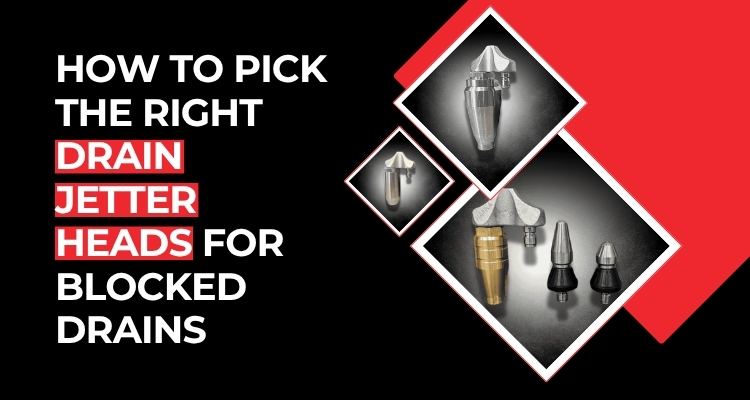
As your business grows, your gear needs to keep pace. Trade and Pro Drain Camera Packs allow you to move into larger commercial and civil infrastructure. When you’re dealing with high-volume stormwater or main sewer lines, you’ll need the extra punch of The Beast 29mm or the Big Unit 39mm. For the most complex diagnostics, the Double P Dual Drain Camera is a game changer. It offers dual views to catch every structural detail in a single pass. To really maximise your earnings, add Locators and specialised Jetter Heads to your rig. This allows you to offer a complete “clear and inspect” service, turning a simple diagnostic call-out into a comprehensive, high-value solution.
Operations and Marketing: Winning Your First 10 Jobs
Gear is useless if it is sitting in the shed. Once you’ve figured out the technical side of how to start a drain inspection business in Australia, you need a pipeline of work. Your first ten jobs are the most critical. They build your portfolio, refine your reporting, and generate the word-of-mouth that sustains a trade business. You aren’t just selling a service; you’re selling certainty. You provide the proof that a problem exists and the data to show how to fix it.
Your “Inspection Report” is your primary product. It needs to be professional, clear, and delivered fast. Clients don’t want a 20-minute unedited video of a dark pipe. They want a concise summary with high-res screenshots of the problem areas. Use a template that highlights the location, depth, and severity of the issue. This professional approach separates you from general plumbers who just “have a look” without providing a formal document.
Pricing is a common trap for new starters. While general plumbing often runs on an hourly rate, specialised diagnostics are better suited to a flat fee. In the Australian market, a standard residential CCTV drain inspection typically ranges from $200 to $350. A flat fee gives the customer upfront certainty. It also allows you to bake in the cost of your specialised gear and the time spent generating the report. This model ensures you are paid for your expertise, not just your time on site; for another perspective on how specialists value their work, you can learn more about Roof Plumbing Expert and their approach to professional roofing services across New South Wales.
Digital Presence for Drain Pros
Get on the map. Your Google Business Profile is your most valuable digital asset. When a homeowner searches for a “blocked drain specialist”, you need to appear in the local map pack. Reviews are everything. Ask every satisfied client for a quick rating before you leave the driveway. This social proof is the fastest way to build credibility when you’re learning how to start a drain inspection business in Australia.
Use the high-definition footage from your Monster 21mm to dominate social media. Raw “before and after” clips of a jetter clearing a massive root ball are strangely addictive and highly shareable. This visual proof builds trust and shows you have the expertise to find the root cause. It is the ultimate “show, don’t tell” marketing strategy for the modern tradie; if you want to see how this same principle of visual impact applies to property presentation, you can read more about Raw at Home and their professional staging services.
Building a Referral Network
Don’t compete with every plumber in town; partner with them. Many general plumbers don’t want the overhead of high-end camera gear. By positioning yourself as a specialist for established service providers like GA PERRY, you can secure a steady flow of diagnostic work while they handle the subsequent repairs. It’s a win-win relationship that builds your reputation and keeps your phone ringing without expensive ad spend.
When identifying potential partners, it is helpful to look at established regional firms; for instance, you can discover CQR Plumbing to see how they manage a broad range of drainage and gas fitting services for their local community.
Real estate property managers are another goldmine. They manage hundreds of aging properties that need routine maintenance. Offer them a standardised property condition report to help them avoid emergency call-outs. It gives them a clear maintenance schedule to show landlords and justifies their management fees. If you’re ready to scale your operations, grab a Pro Drain Camera Pack and start bidding on these larger commercial maintenance contracts.
Minimising Downtime: Maintenance and Scaling with Razorback
Gear will get thrashed. It’s the nature of the trade. If you’re learning how to start a drain inspection business in Australia, you need to accept that maintenance is non-negotiable. Your camera head spends its life submerged in grit, grease, and sewage. If you treat it like a delicate toy, it’ll fail when you need it most. If you treat it with respect and a solid cleaning routine, it’ll make you money for years. Rugged gear is built to last, but it isn’t indestructible.
Downtime is a profit killer. Every day your rig is in the workshop is a day you aren’t billing. This is why local support is a business lifesaver. Buying cheap gear from overseas might save a few bucks upfront, but you’re stuffed when a connector snaps on a Monday morning. Having access to Australian-based repair experts ensures you’re back on the job site while the competition is still waiting for parts to clear customs. Local repairs keep your business agile and your clients happy.
Push Cable and Camera Head Care
Don’t force it. Kinking your cable in a tight bend is the fastest way to end your day early. You need to learn the “feel” of the push rod. If it resists, back off and reset. After every single job, wipe down the cable as it comes out of the reel. Clean the spring and connectors with fresh water to remove corrosive debris. Storing your gear correctly prevents moisture build-up in the monitor and control box. Wet gear in a sealed ute box is a recipe for internal corrosion. Keep it dry, keep it clean, and keep it working.
The Razorback Support Advantage
We are Australian-owned and operated. We know exactly what the local conditions do to your kit. As your business grows from residential call-outs to civil contracts, your gear needs to scale with you. You might start with the Monster 21mm, but you’ll eventually need the Big Unit 39mm or a specialised locator to handle more complex jobs. Our local repair services mean your investment is always protected and upgradable. We don’t just sell cameras; we keep them in the field where they belong.
Scaling your business means adding more than just gear. It means adding capacity. When your schedule is booked three weeks out, it’s time to think about a second van and a dedicated mainline camera. This is how to start a drain inspection business in Australia that actually lasts. You build a reputation for reliability. You show up with gear that works. You provide reports that close deals. Check out our Starter Drain Camera Packs here and get your new venture off the ground with kit that won’t let you down.
Own the Underground: Launch Your Business Today
The opportunity is clear. Aging pipes. Visual diagnostics. High-margin work. You’ve got the roadmap now. From nailing your ABN to choosing a workhorse like the Monster 21mm, the path to a profitable trade business is wide open. Don’t let the fear of gear failure stall your progress. Success in 2026 comes down to rugged kit and professional reports that prove the problem to the client every single time. It is about shifting from manual labour to technical expertise.
You’ve got the full blueprint on how to start a drain inspection business in Australia. It’s time to pull the trigger. Partner with a brand that’s AU-owned and operated. We provide trade-tested gear and a local repair centre to keep you in the field. Minimal downtime. Maximum profit. Build your business with a Razorback Starter Drain Camera Pack. The jobs are waiting. Go and claim them.
Frequently Asked Questions
Do I need a plumbing licence to start a drain inspection business in Australia?
Yes, you generally need a plumbing licence or specific trade qualifications to legally access and inspect sewer infrastructure. Licensing requirements vary by state, but most jurisdictions require a formal plumbing qualification for any work involving sewer assets. Always check with your local state regulator to ensure you meet the current 2026 compliance standards before you start charging for inspections. Professional training is your best defence against liability.
How much does it cost to start a professional drain inspection business?
Expect to invest between $25,000 and $60,000 to get a professional sole trader operation off the ground. This budget covers your trade vehicle, specialised diagnostic gear, business registration, and initial marketing. High-quality cameras are your biggest upfront cost, but they are the engine of your business. Cutting corners on your rig leads to downtime that will cost you far more than the initial savings.
What is the best drain camera for a small plumbing startup?
The Monster 21mm is the essential entry-level workhorse for any new Australian startup. It balances a compact head size for tight residential bends with the ruggedness needed for daily site work. When you’re learning how to start a drain inspection business in Australia, you need gear that is repairable and upgradable. Starting with a 21mm rig ensures you can handle the majority of residential blocked drain call-outs immediately.
How much can I charge for a CCTV drain inspection in Australia?
Standard residential CCTV inspections typically range from $200 to $350 depending on the complexity of the report. Some metropolitan providers start their rates at $250 plus GST for a basic site visit. Commercial or civil inspections that require formal reporting codes often command much higher fees. Pricing as a flat fee gives your clients certainty while protecting your margins for specialised diagnostic work.
Is a self-levelling camera head worth the extra investment for a new business?
Yes, a self-levelling head is worth the investment because it produces professional, upright footage that is easier for clients to understand. It removes the confusion of disoriented video, which helps you sell high-value repairs faster. When a homeowner can clearly see the problem in 1080p without tilting their head, they are more likely to approve a $5,000 relining job on the spot. It’s a professional edge.
What happens if my drain camera breaks on the job?
You need a local repair partner on speed dial to minimise your downtime and keep your business moving. Gear gets thrashed in this industry, and a broken push rod can stop your billing instantly. Razorback provides local Australian repair services for our range, ensuring you aren’t waiting weeks for overseas parts. Keeping a modular system allows you to swap parts and stay on the job while repairs happen.
Can I use a drain camera for stormwater and sewer pipes?
You can use the same high-quality camera for both stormwater and sewer pipes, provided the head size fits the line. A 21mm head like The Boar is perfect for standard 100mm residential lines in both systems. Always ensure you thoroughly clean and sanitise your gear when moving between sewer and stormwater assets. This prevents cross-contamination and extends the life of your camera’s seals and connectors.
How do I generate a professional report for my clients?
Use a dedicated reporting template that includes high-resolution screenshots and clear descriptions of any structural faults. A professional report is the key to winning high-margin repair work when figuring out how to start a drain inspection business in Australia. It should clearly show the depth and location of the issue. Most modern monitors allow you to capture snapshots or video clips directly to a USB for easy sharing.