Plumbing Business Plan Australia 2026: The Tradie’s Guide to Scaling
Running a plumbing business is about more than staying busy.
If every new job means more hours on the tools, more pressure on you and more weekends spent catching up, the business may be growing in revenue without becoming easier—or more profitable—to run.
A strong plumbing business plan for Australia in 2026 should help you decide where your best opportunities are, what equipment and people you need, how you will protect your margins and what systems need to be repeatable before you scale.
For plumbing businesses looking to move beyond general maintenance, specialist drainage and CCTV inspection can form part of that strategy.
Quick Answer
A plumbing business plan should cover your target customers, most valuable services, pricing, equipment, staffing, marketing, compliance, cash flow, maintenance and growth targets.
The goal is not simply to book more jobs. It is to build a business that can complete profitable work consistently without depending on the owner for every decision.
Key Takeaways
- Build your plan around profitability and repeatability, not revenue alone.
- Track the performance of individual service categories so you know which work is worth scaling.
- Consider specialist services such as drainage and CCTV inspection where they fit your market and capabilities.
- Treat professional equipment as a business asset and assess its total cost of ownership.
- Standardise equipment and workflows before adding more technicians or vehicles.
- Reduce avoidable downtime with preventative maintenance and access to local repair support.
- Use clear CCTV evidence and professional reporting to help customers understand the problem and recommended solution.
- Review your business plan regularly as your costs, team, service mix and market change.
What Should an Australian Plumbing Business Plan Include in 2026?
A useful business plan is not a document you create once and forget.
The Australian Government’s business planning guidance recommends using a business plan to set objectives, establish how those objectives will be achieved and identify risks that could affect the business. It also recommends reviewing the plan as the business changes.
Your plumbing business plan should therefore connect your financial goals with what actually happens on the job site.
At minimum, consider:
Expert Advice
Don't start with the question, “How do I get more plumbing jobs?”
Start with:
“Which jobs do I actually want more of?”
More work does not automatically create a better business. Your service mix should support the margins, customers and type of operation you ultimately want to build.
Why Service Mix Matters When Scaling a Plumbing Business
General plumbing work can keep a diary full, but not every service contributes equally to the bottom line.
A blocked drain, tap replacement, emergency callout, CCTV inspection and commercial maintenance contract can require very different amounts of labour, equipment, travel and administration.
That is why total revenue alone does not tell you which part of the business should grow.
Track profitability by service category.
Useful metrics include:
- Average job value
- Gross margin by service
- Labour hours per job
- Revenue per technician
- Quote-to-job conversion rate
- Repeat customer rate
- Equipment utilisation
- Equipment downtime
- Revenue from recurring commercial or strata work
This gives you a clearer picture of what is generating value—and what is simply keeping the team busy.
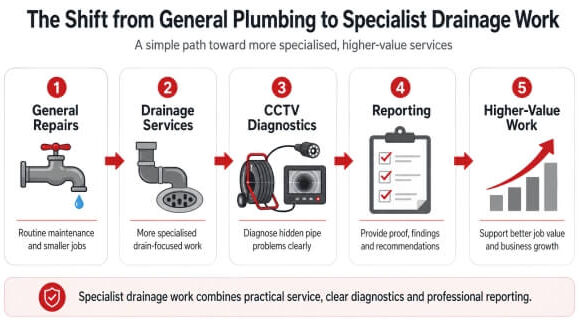
Is Specialising in Drainage Worth Considering?
For the right plumbing business, yes.
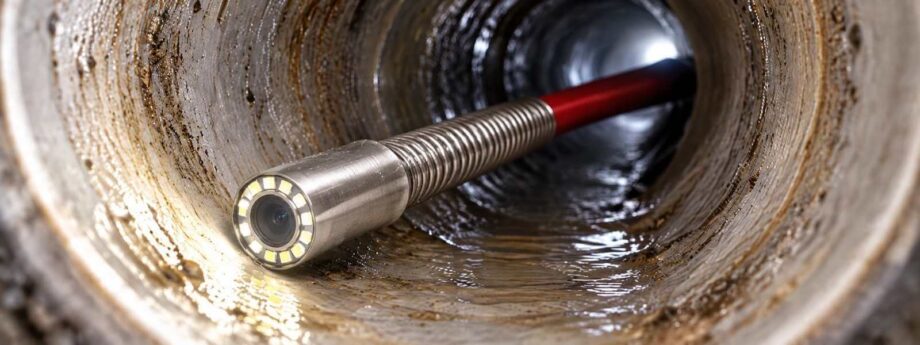
Specialist drainage work can combine practical plumbing expertise with diagnostic tools such as CCTV drain cameras and locators.
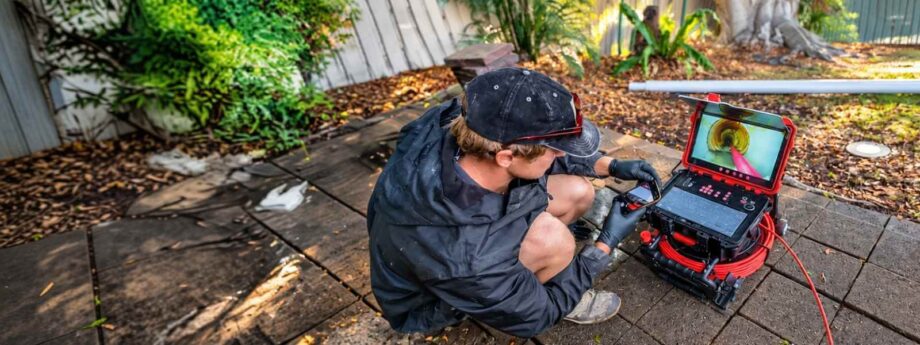
Instead of only clearing the immediate blockage, a technician may be able to inspect the pipe, identify the underlying defect, document the issue and explain the available repair options.
That creates a different customer conversation.
Rather than:
“The drain is clear.”
You can show:
“This is where the problem is, this is what caused it, and these are the available options.”
The value comes from better diagnosis and clearer evidence—not from technology for technology’s sake.
- Fault identification
- Customer explanations
- Before-and-after documentation
- Quoting follow-up repairs
- Strata and property-manager reporting
- Locating recurring defects
- Building a record of completed work
Build Your Business Around the Customers You Want
A business designed mainly around residential emergency work will operate differently from one targeting strata managers, facilities managers or commercial property owners.
Define your ideal customers before building the rest of the plan.
Ask:
Who has the problems we are best equipped to solve?
Then consider what those customers value.
A homeowner may prioritise speed and a clear explanation.
A property manager may need photos, footage, written findings and documentation that can be forwarded internally.
A commercial client may place greater value on reliability, response times, reporting and the ability to handle similar work across multiple sites.
Your equipment, reporting process and marketing should support the customers you are trying to attract.
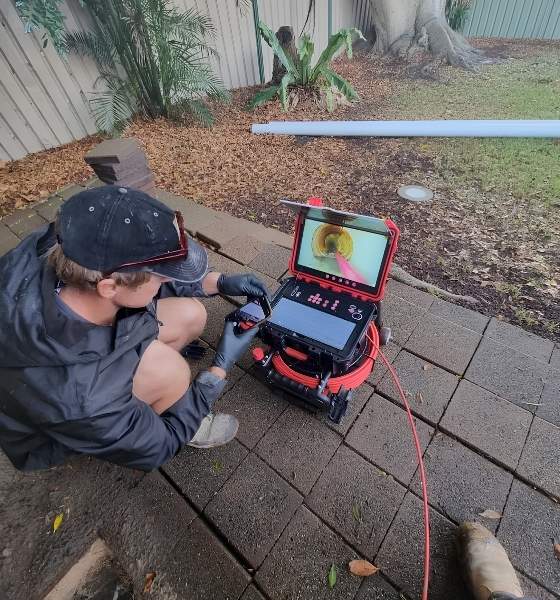
Use CCTV to Make Drainage Work Easier to Understand
Drain problems are difficult for customers because most of the problem is hidden underground.
Without evidence, they are being asked to trust a diagnosis they cannot see.
Professional CCTV inspection changes that.
A drain camera can help plumbers identify problems such as:
- Root intrusion
- Cracked or damaged pipework
- Displaced joints
- Blockages
- Debris buildup
- Pipe offsets
- Areas that may require further investigation
The inspection can then form part of a more transparent recommendation.
A Better Drainage Workflow
Customer Enquiry
Initial Drain Assessment
Clear or Access the Line
CCTV Inspection
Identify and Document the Problem
Explain the Findings
Recommend the Appropriate Next Step
Provide Footage or Report Where Required
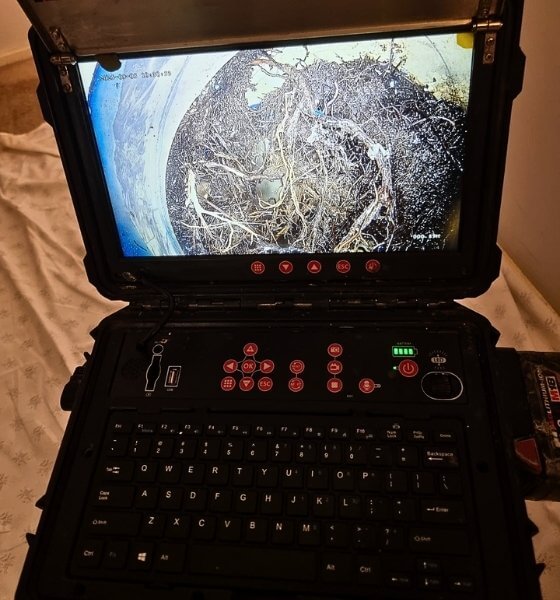
Why Clear Footage Matters
Customers do not need to understand every technical detail.
They need to understand the problem.
Clear footage lets the technician show what is happening inside the pipe rather than relying entirely on a verbal explanation.
That can make repair recommendations easier to understand and gives property managers or commercial customers evidence they can share with other decision-makers.
Why Clear Footage Matters
The cheapest equipment is not automatically the least expensive option.
When comparing professional drain-camera equipment, consider the total cost of ownership.
That includes:
- Purchase price
- Expected working life
- Repairability
- Spare-parts availability
- Warranty
- Repair turnaround
- Technician training
- Compatibility with other equipment
- Time saved on jobs
- Jobs that can be completed with the equipment
- Revenue lost if the system is unavailable
A camera that saves diagnostic time, supports reporting or enables additional work may produce value beyond the initial inspection itself.
A Simple Equipment ROI Framework
Rather than asking:
“How much does this camera cost?”
Ask:
“How much productive work can this camera help us complete over its usable life?”
Consider:
Equipment investment
versus
Time saved + additional diagnostic capability + jobs completed + downtime avoided
You do not need complicated financial modelling.
Even a basic calculation creates a more informed equipment decision.
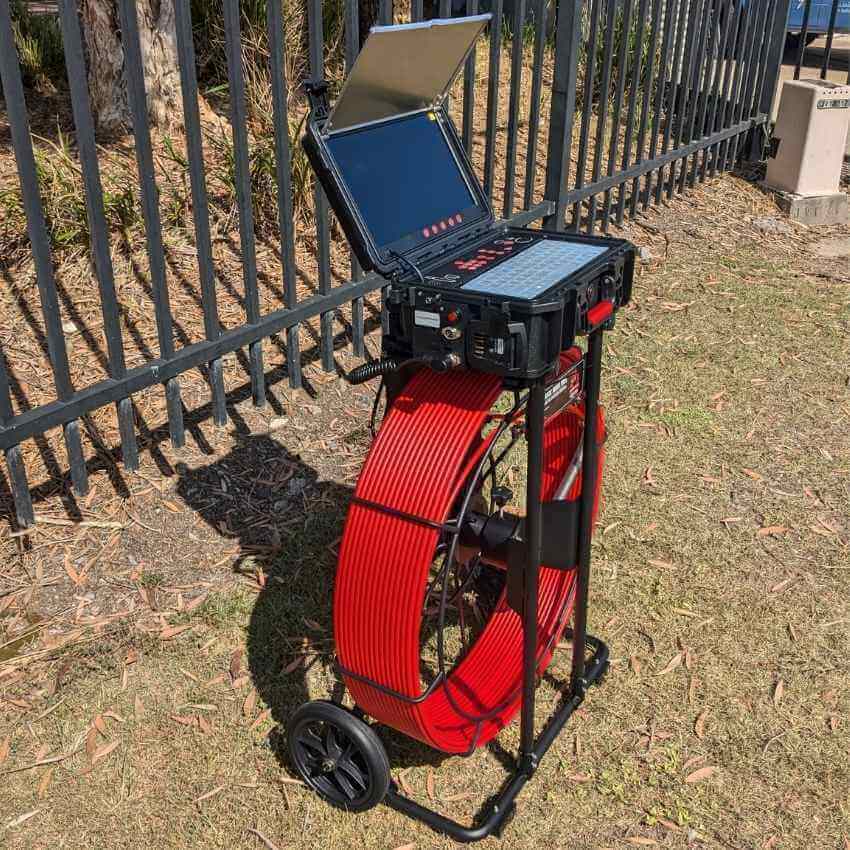
Standardise Your Fleet Before You Scale It
Adding another vehicle does not automatically mean you have successfully scaled.
If every van has different equipment, accessories and procedures, growth can create more complexity.
Standardisation reduces that complexity.
Where practical, technicians should know:
- What equipment is on each vehicle
- Where accessories are stored
- How the equipment operates
- How inspections are recorded
- What information customers receive
- How faults are reported
- What happens if equipment is damaged
A repeatable setup also makes onboarding easier.
A technician moving between vehicles should not need to relearn the entire system.
Build a Basic Equipment Register
| Asset | Vehicle | Purchase Date | Warranty | Last Service | Next Check | Condition |
|---|---|---|---|---|---|---|
| Drain camera | Van 1 | — | — | — | — | — |
| Locator | Van 1 | — | — | — | — | — |
| Jetter | Van 1 | — | — | — | — | — |
Plan for Equipment Downtime Before It Happens
Equipment failures are unavoidable.
Poor preparation for them is not.
If a drain camera fails on a job and there is no backup plan, the cost may include more than the repair.
It could mean:
- Rescheduling work
- Technician downtime
- Returning to site
- Delayed reports
- Delayed quotes
- Frustrated customers
Your plumbing business plan should therefore include an equipment-maintenance strategy.
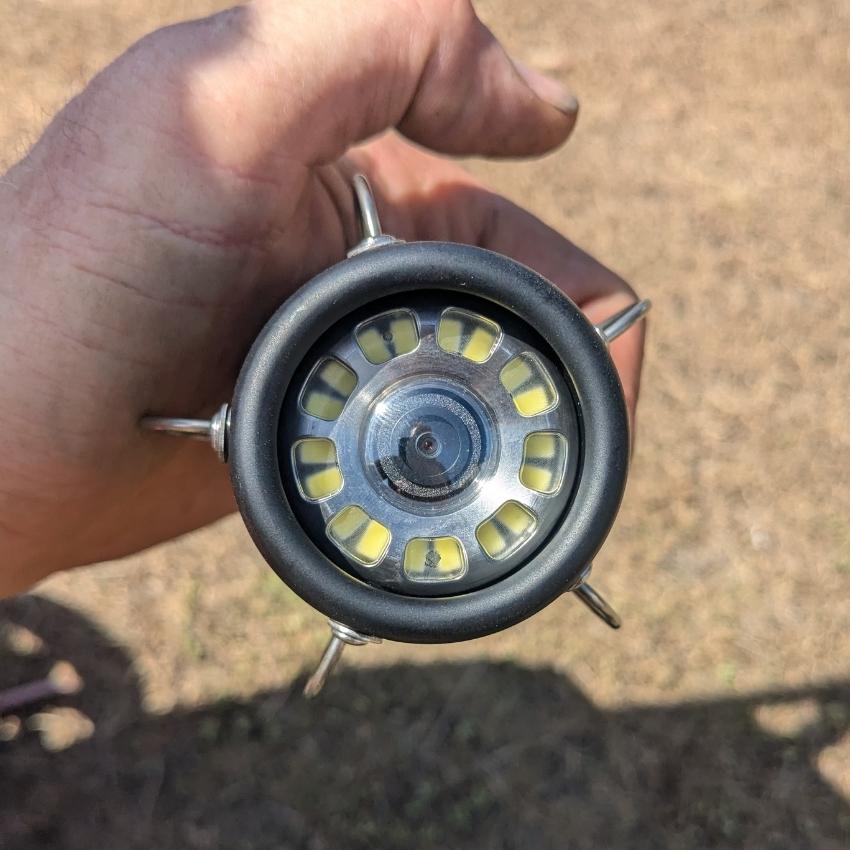
Build a Preventative Maintenance Routine
Create checks based on the equipment manufacturer’s recommendations and how heavily the system is used.
For drain cameras, technicians can routinely inspect items such as:
- Camera head
- Lens
- Push rod
- Reel
- Connectors
- Battery
- Monitor
- Recording functions
- Sonde or locating functions where fitted
Keep servicing and repair records with the equipment register.
Keep Compliance in Your 2026 Business Plan
Compliance should be treated as an operational requirement rather than an afterthought.
One significant change affecting the Australian plumbing industry took effect on 1 May 2026.
Under National Construction Code requirements, identified copper-alloy plumbing products used to convey drinking water must meet the new lead-free requirements and carry the appropriate Lead Free WaterMark certification.
This does not apply to every plumbing product, so plumbers should confirm whether the specific product and application fall within the requirements.
Changes like these reinforce why purchasing, stock management and compliance processes belong inside the business plan—not just on the job-site checklist.
Build Marketing Around Proof, Not Just Claims
Most plumbing businesses can say they are:
- Reliable
- Professional
- Experienced
- Affordable
- Local
Customers see those claims everywhere.
Evidence is more persuasive.
If drainage is an important growth area, build marketing around what demonstrates your expertise.
Examples include:
- Real CCTV footage
- Before-and-after inspections
- Case studies
- Diagnosed drainage problems
- Technician explanations
- Examples of reporting
- Equipment demonstrations
- Customer reviews
- Commercial or strata project examples
This content can also support local SEO because it gives search engines more context about the actual services your business performs.
Turn Every Good Job Into a Marketing Asset
That is a far stronger marketing system than publishing generic plumbing advice with no connection to your actual work.
5 Steps to Implement Your 2026 Plumbing Business Plan
Planning matters.
Execution matters more.

Step 1: Audit Your Current Business
Review:
- Revenue by service
- Margins
- Technician productivity
- Equipment
- Most common customers
- Best customers
- Repeat work
- Marketing performance
- Operational bottlenecks
Identify what is working before deciding what to expand.

Step 2: Choose the Services You Want to Grow
Do not try to scale everything at once.
Select the areas where your team has the capability, market demand and potential for a strong return.
If drainage and CCTV inspection are among them, determine exactly what equipment, training and reporting processes are required.

Step 3: Standardise the Workflow
Document the journey from:
Enquiry → Booking → Job → Inspection → Recommendation → Reporting → Follow-Up
The goal is for a technician to deliver a consistent customer experience without you supervising every step.

Step 4: Equip and Train the Team
Match equipment to the type of work you actually perform.
Then ensure technicians know how to:
- Operate it correctly
- Capture usable footage
- Identify common defects
- Explain findings
- Store or provide reports
- Look after the equipment

Step 5: Measure and Improve
Review your KPIs monthly or quarterly.
Your business plan should evolve as the business changes.
The Australian Government also recommends reviewing business plans regularly rather than treating them as static documents.
Choosing Drain Camera Equipment for a Growing Plumbing Business
If CCTV drainage work is part of your growth plan, equipment should match the actual jobs your team handles.
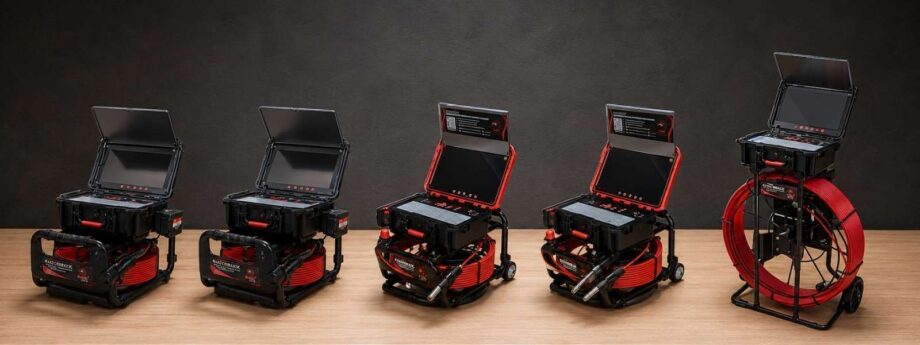
Razorback currently offers professional systems for different pipe sizes and applications.
For example, The Monster 21mm Drain Camera uses a 21mm HD camera head and 50m push rod and is designed for professional drain inspection work. Razorback also offers systems such as The Boar 21mm, The Beast 29mm, The Double P and Big Unit 39mm Drain Camera for different inspection requirements.
The right choice depends on the type of pipework your team encounters, the camera-head size required, cable length, locating requirements and how the system fits into your existing workflow.

Don't Choose a Camera Based on Specifications Alone
Ask how the system will operate inside the business.
✅ Can technicians use it consistently?
✅ Can the footage support your reporting?
✅ Can damaged components be serviced?
✅ Can you get support when something goes wrong?
✅ And can the system continue to meet your requirements as the drainage side of the business grows?
Razorback’s current range is supported locally in Australia, with its drain-camera products carrying a 12-month factory warranty on all parts and an additional 12 months of coverage on the Control Box when purchased directly from Razorback.
Frequently Asked Questions
What should be included in a plumbing business plan in Australia?
A plumbing business plan should cover your target customers, service mix, pricing, equipment, staffing, marketing, compliance, financial forecasts, operational processes and growth goals.
It should also identify risks and explain how the business will achieve its objectives.
How often should a plumbing business plan be reviewed?
Is drainage a good specialisation for a plumbing business?
It can be, depending on your market, skills and equipment.
Drainage services can incorporate CCTV inspection, locating, reporting and follow-up repair work. Analyse your own demand, margins and operating costs before deciding whether to make it a major growth area.
Can a drain camera help a plumbing business generate more work?
A professional drain camera can help technicians identify and document problems that cannot be seen from the surface.
Clear footage may also make it easier to explain recommended repairs to customers because they can see the problem rather than relying only on a verbal diagnosis.
How do I calculate the ROI of a drain camera?
Consider more than the purchase price.
Calculate the potential value created through diagnostic time saved, jobs completed, additional services enabled and reduced downtime. Then compare that with the purchase, maintenance, repair and training costs over the equipment’s useful life.
What should plumbers look for when buying a professional drain camera?
Consider:
- Appropriate camera-head size
- Pipe-size suitability
- Image quality
- Push-rod length
- Durability
- Recording capabilities
- Locating or sonde options
- Repairability
- Spare-parts availability
- Warranty
- Local technical support
Choose equipment around the work you perform rather than selecting solely on price.
Why is fleet standardisation important for a growing plumbing business?
Standardisation makes equipment easier to manage and technicians easier to train.
When vehicles use similar systems, accessories and procedures, technicians can move between jobs or vans with less disruption. It can also simplify maintenance, spare-parts management and onboarding.
What changed for Australian plumbers on 1 May 2026?
From 1 May 2026, specified copper-alloy plumbing products used to convey drinking water must meet National Construction Code lead-free requirements and carry the appropriate Lead Free WaterMark certification.
Plumbers should check the WaterMark requirements for the particular product because the rules do not apply to every plumbing item.