Professional Drain Cameras in Australia: A Practical Buying Guide for Tradies
A drain camera earns its keep when it helps you get a clearer answer on site.
That might mean identifying a blockage, finding tree-root intrusion, checking the condition of a pipe or giving a customer footage they can actually understand.
But not every camera is suited to everyday trade work.
If you’re looking for a professional drain camera in Australia, it’s worth looking past the headline specs and thinking about the things that actually matter on the job: pipe size, camera-head diameter, push-rod length, image quality, locating capability, recording, replacement parts and local support.
Here’s what to look for.
Key Takeaways
- Choose a camera based on the pipe sizes and inspection work you actually do.
- High-definition imaging and self-levelling can make footage easier to interpret and report.
- Push-rod diameter, length and flexibility matter just as much as camera-head size.
- A built-in sonde and compatible locator can help pinpoint faults underground.
- Repairability, replacement parts and local support can be just as important as the purchase price.
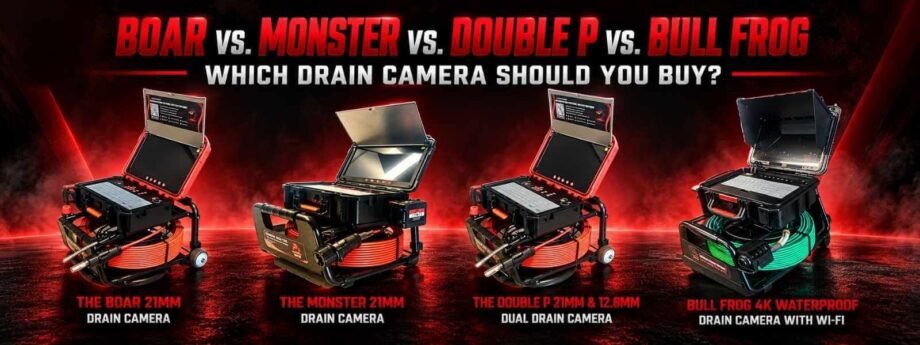
- Razorback’s current range covers smaller, standard residential and larger-pipe inspection work with different camera sizes and systems.
What Makes a Drain Camera Suitable for Professional Use?
There’s a big difference between a camera that’s used occasionally and one that’s expected to work day after day.
A professional system needs to suit the environment it’s being used in.
For plumbers and drain specialists, that usually means dealing with:
- Water
- Grease
- Grit
- Debris
- Repeated cable movement
- Knocks during transport
- Long days in the ute
- Regular setup and pack-down
That’s why durability matters.
But durability isn’t the only thing to look at.
A professional drain camera should also help you diagnose the job efficiently and give you footage that’s useful after the inspection.
Image Quality
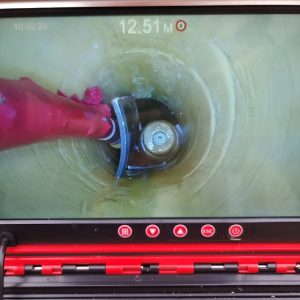
Clear footage makes it easier to identify visible defects and explain what you’ve found.
Current Razorback systems such as the Monster, Boar, Beast and Big Unit use HD 1080P camera heads, while the Double P combines a 21mm HD camera with a smaller 12.8mm micro-camera for tighter applications.
High resolution isn’t the whole story, though.
Lighting, camera position and pipe condition also affect what you’ll actually see.
Self-Levelling
A self-levelling camera keeps the image upright while the head moves through the pipe.
That makes footage easier to read on site and easier to show to a customer later.
Razorback’s current Monster 21mm, Boar 21mm, Beast 29mm and Big Unit 39mm systems all include self-levelling camera heads.
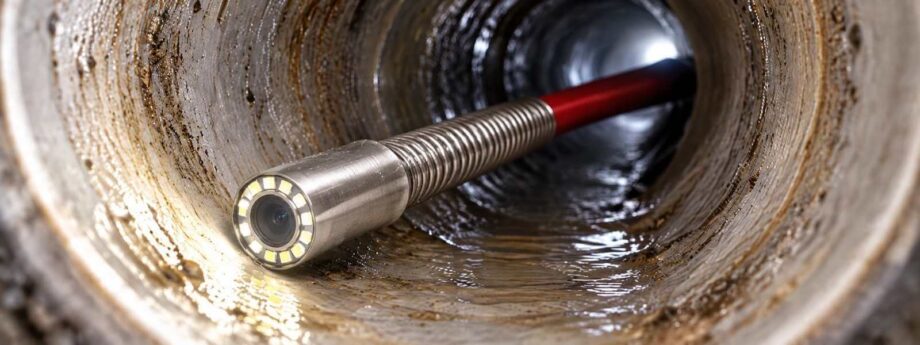
Camera-Head Construction
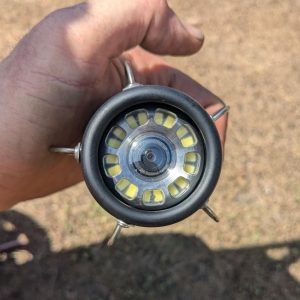
The camera head is going to cop a fair bit of abuse.
Razorback currently uses stainless-steel housings and scratch-resistant sapphire glass lenses on a number of its professional camera systems, including the Monster.
The important distinction is scratch-resistant, not scratch-proof. No camera lens is completely immune to damage.
Push Rods Matter More Than Most Buyers Think
The camera head gets most of the attention, but the push rod is doing a lot of the hard work.
A good push rod needs enough stiffness to drive the camera through the line while still giving you enough flexibility to handle bends.
Razorback’s Monster and Boar currently use:
- 50m Cable Length
- 6.8mm Kink-Resistant Fibreglass Push Rod
The Double P uses two different rods:
- 50m × 6.8mm for the 21mm Camera
- 40m × 4.8mm for the 12.8mm Micro-Camera
That combination gives the Double P more flexibility across different pipe sizes.
Built-In Sondes and Locating
A drain camera tells you what the pipe looks like.
A locator can help tell you where the problem is.
Many Razorback camera heads include a built-in 512Hz sonde.
A compatible locator can detect that signal from above ground, helping you identify the approximate position and depth of the camera or visible defect.
That can be particularly useful before excavation, repair work or relining.
You don’t necessarily need a locator for every camera inspection.
But if locating defects is part of the service you provide, it’s a very useful addition.
Matching Camera Size to Pipe Size
There isn’t one camera that’s perfect for everything.
The easiest way to narrow your options is to start with the pipes you inspect most often.
The Monster 21mm
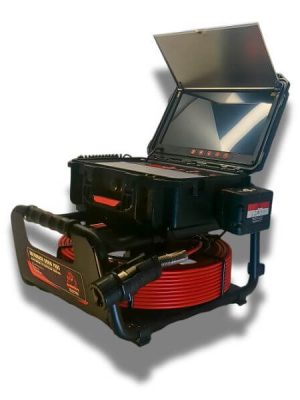
The Monster 21mm is Razorback’s entry-level professional maintenance camera.
It’s currently designed for approximately 90–150mm pipes and includes:
- 21mm HD 1080P Self-Levelling Head
- Built-in 512Hz Sonde
- Scratch-Resistant Sapphire Glass Lens
- 50m × 6.8mm Fibreglass Push Rod
- 13.3-inch 1080P IPS Monitor
- Recording Capability
- Built-in Metre Counter
It’s a straightforward option for maintenance plumbers doing regular residential drainage work.
The Boar 21mm
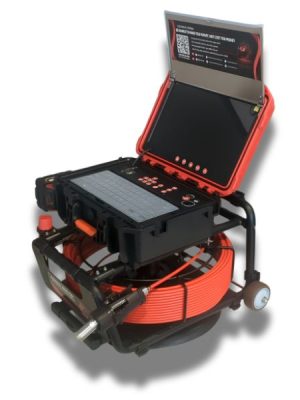
The Boar 21mm also sits in the 90–150mm range.
Its current specification includes a 21mm HD 1080P self-levelling head, built-in 512Hz sonde, 50m × 6.8mm push rod and 13.3-inch monitor.
Because the Monster and Boar overlap quite a bit technically, I’d choose between them based on the exact pack configuration, inclusions and current Razorback recommendations rather than pretending one has a completely different job role.
The Beast 29mm
For larger drainage work, The Beast 29mm is designed for approximately 100–300mm pipes.
It uses a 29mm HD 1080P self-levelling camera head with a built-in 512Hz sonde.
That makes it more appropriate where you want a larger head and broader view in bigger pipelines.
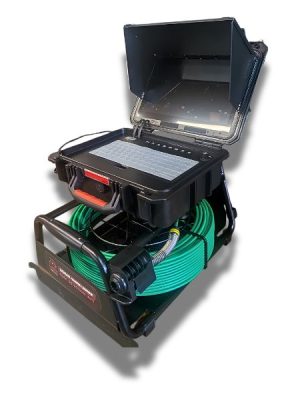
Bull Frog 4K Waterproof Drain Camera
The Bull Frog 4K Waterproof Drain Camera with Wi-Fi – 45m is aimed at plumbers who want higher-resolution footage and a more modern inspection setup.
Its current configuration includes:
- 4K Camera System
- 45m × 7.5mm Push Cable
- 13.3-Inch Touchscreen
- Wi-Fi Connectivity
- Self-Levelling Camera
- Built-In 512Hz Sonde
- Optional 35mm Pan-Tilt Camera Head
- External Milwaukee Battery Cradle Compatibility
Where the Monster and Boar are more straightforward everyday inspection systems, the Bull Frog is better suited to plumbers who want higher-resolution recording, touchscreen control and Wi-Fi capability, with the option to move into pan-tilt inspection work.
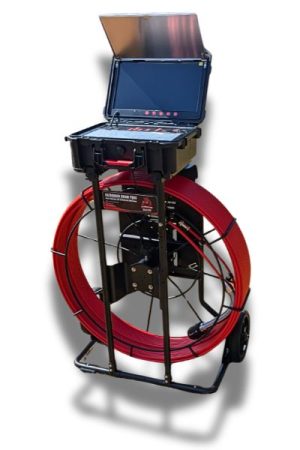
Big Unit 39mm
The Big Unit 39mm is Razorback’s larger inspection system.
It’s designed for approximately 100–300mm pipes and currently includes:
- 39mm HD 1080P Self-Levelling Camera
- Built-in 512Hz Sonde
100m Cable - 13-Inch Recording Monitor
- Adjustable LED Llighting
- External Battery-Adaptor Compatibility
It’s aimed at longer and larger pipeline inspection work.
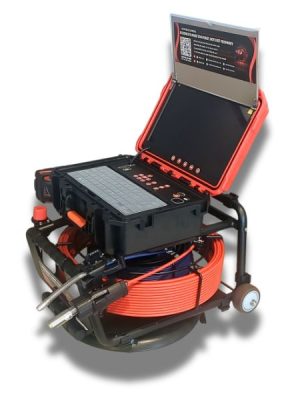
The Double P Dual Drain Camera
The Double P is worth considering if your work varies significantly in pipe size.
It combines:
- 21mm HD 1080P Camera
- 12.8mm HD Micro-Camera
- 50m × 6.8mm Push Rod
- 40m × 4.8mm Push Rod
Razorback currently lists it for approximately 25–150mm pipes.
The important thing to understand is that “dual camera” doesn’t mean a 360-degree or simultaneous two-angle view.
You’re getting two separate camera systems suited to different inspection situations.
Resolution Isn't Everything
It’s easy to get caught up comparing megapixels and screen sizes.
In real inspections, a useful image depends on several things working together.
That includes:
- Camera Resolution
- Lighting
- Lens Condition
- Camera Centring
- Pipe Diameter
- Water or Debris Inside the Line
- Screen Quality
- Recording Quality
Adjustable lighting can be particularly useful inside reflective PVC pipe, where excessive light can create glare.
The goal isn’t simply to have the highest number on the spec sheet.
It’s to get footage you can actually use.
Recording and Reporting
For professional CCTV inspections, being able to record what you find can add real value.
Footage and screenshots can help with:
- Customer explanations
- Quotes
- Before-And-After Comparisons
- Property Reports
- Strata Documentation
- Maintenance Records
The Monster, for example, includes USB and SD recording along with a built-in metre counter and microphone for commentary.
The Big Unit also supports video, screenshots, voice commentary and text annotation.
A good report doesn’t need to be complicated.
It just needs to clearly show what you inspected, what you found and where the important defects were located.
Battery Life and Power
Battery runtime matters when you’re moving between sites.
For example, Razorback currently lists the Monster with approximately 4–6 hours of continuous operation from its rechargeable battery.
The Big Unit takes a different approach and supports Milwaukee or Makita external battery adaptors for extended runtime.
Check the specification for the actual model you’re considering rather than assuming every camera has the same battery setup.
Look at Repairability Before You Buy
This is one of the areas that can get overlooked.
If your camera head, push rod or screen develops a fault, what happens next?
Ask:
- Can the head be replaced separately?
- Can the push rod be replaced?
- Are connectors and spare parts stocked locally?
- Can the system be upgraded?
- How long are typical repairs?
- Does the supplier provide Australian support?
Razorback’s current range places a big emphasis on interchangeable components and locally available parts.
The Monster also has a detachable, field-serviceable camera head.
For a plumber using the camera for billable work, those details can matter just as much as image resolution.
Basic Drain Camera Maintenance
Drain cameras aren’t delicate showroom gear.
They’re working in some pretty unpleasant environments.
A little maintenance after each job can help keep the system in good condition.
Clean the Push Rod
As the rod comes back onto the reel, remove obvious dirt and debris according to the manufacturer’s cleaning recommendations.
Don’t force a heavily loaded or kinked rod back into the reel.
Inspect the Camera Head
Check:
- Lens
- Spring
- Connections
- Lighting
- Camera housing
- Skids
If something looks loose or damaged, sort it out before the next difficult job.
Store the Gear Properly
Avoid leaving sensitive electronics exposed to excessive heat or direct sunlight unnecessarily.
Keep the unit reasonably clean and dry and protect the monitor and control box during transport.
Choosing a Razorback Drain Camera Pack
If you’re buying more than just the camera, Razorback also bundles different systems into camera packs.
Starter Drain Camera Pack
The current Starter Drain Camera Pack is built around the Monster 21mm and RIDGID Scout Locator.
It’s designed for approximately 90–150mm pipes and gives plumbers a ready-made inspection and locating setup.
Trade and Pro Drain Camera Packs
The Trade Drain Camera Pack and Pro Drain Camera Pack are aimed at businesses that need a wider equipment setup or more flexibility.
Before moving to a larger pack, look at the work you’re actually doing.
If you’re regularly needing additional camera sizes, locating gear or backup equipment, a broader pack may make sense.
If you’re not, buying more gear doesn’t automatically make the business more profitable.
Why Australian Support Matters
Razorback is Australian owned and operates locally, while its drain-camera systems are imported and configured for Australian plumbers.
The company currently describes its cameras as imported cameras designed to suit Australian plumbers, with interchangeable parts and local support.
That distinction matters.
The value isn’t that the cameras are Australian manufactured.
It’s that you’ve got an Australian supplier behind the equipment, with locally available parts, support and repair options.
For a working plumber, that can be far more useful than a flashy specification with no backup behind it.
Choose the Camera That Fits Your Work
A professional drain camera shouldn’t be chosen because it has the biggest screen or the biggest camera head.
Start with the jobs you’re doing.
If you’re mainly inspecting standard residential drains, a 21mm system such as the Monster or Boar may be the right fit.
If you’re working on larger pipelines, the Beast or Big Unit gives you a larger-head option.
If you regularly move between smaller and standard pipe sizes, the Double P gives you both 12.8mm and 21mm camera systems in one setup.
Then look at the things that matter after you’ve bought it:
- Parts
- Repairs
- Warranty
- Support
- Recording
- Locating
- Upgrade options
Get that combination right and you’ve got a camera that earns its place in the ute.
Designed to make you money, not cost you money.